Why Your Business Needs a Brand Book (Brand Guide)

A brand book, also called a brand guide or brand identity guide, captures your brand identity and visual style in one clear document that tells your brand story. It steers all your communication and marketing, so your brand looks professional and recognizable at every touchpoint.
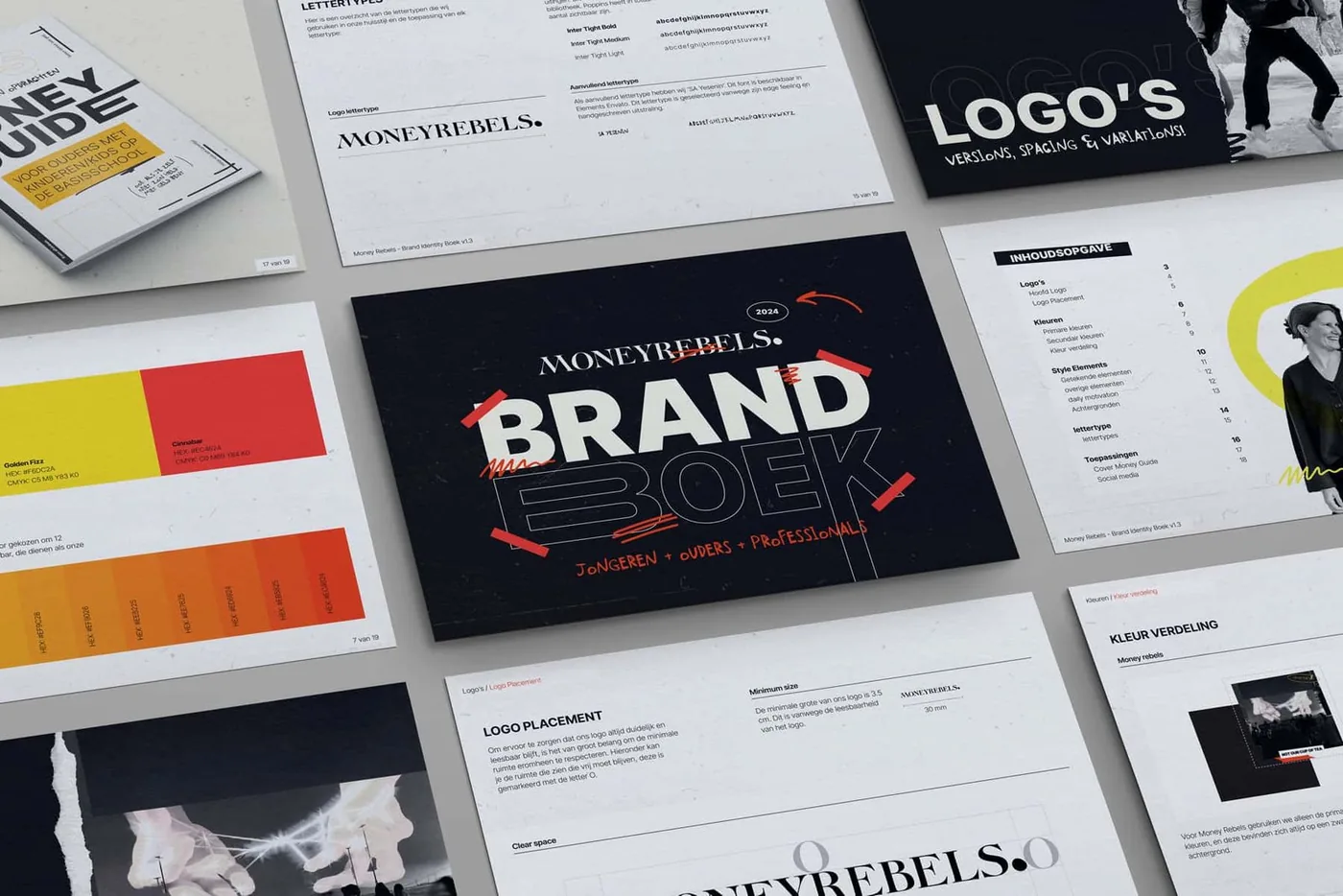
The short version
A brand book holds your brand story, visual style and tone of voice, so everyone who speaks for your company makes the same choices. A style guide covers only the visual side. In 2026 a brand book should also say how you work with AI tools, which color combinations are accessible enough, and which short brand description you use everywhere.
Why does a company need a brand book?
A brand book is the common thread through every choice and asset of your brand. It underpins everything you put out, to customers and to staff. With one in place, your message lands the same way at every point. Consistency makes you recognizable and trustworthy, and your audience knows what to expect from you.
What does a brand book give your team and customers?
A brand book helps you get your message across clearly to customers. Your team gets something to hold on to while they learn the brand and carry it out consistently. Everyone in the organization stays aligned and acts on the core values. That strengthens your brand identity and recognizability, and it pulls the team closer, because everyone shares the same vision.
What is the difference between a brand book and a style guide?
We treat the two as separate things. A style guide covers only visual elements such as colors, fonts and logos. It sets rules for using them, so your brand stays visually consistent.
Besides the style rules, a brand book contains the brand story, a description of your target audience and guidance on the tone of your communication. We build it so it also helps you present your brand strategically. You get a document that tells your story and gives practical support for consistent communication.
| Style guide | Brand book | |
|---|---|---|
| Contents | Logo, colors, fonts, image use | The same parts plus brand story, audience and tone of voice |
| Used by | Designers and whoever does layout | Everyone who communicates on behalf of the brand |
| Answers | What does it look like? | What do we stand for, and how do we sound? |
What goes into a brand book?
One of ours has three parts.
Brand description
The brand description starts with your mission (why does your brand exist, and what drives you?) and your vision (where do you want to go?). Next come your core values, the principles that define your brand, and your target audience: who do you want to reach? We also pin down your brand essence, what makes your brand unique, and how you set yourself apart from competitors.
Visual identity
Your visual identity is the recognizable face of your brand. Clear guidelines keep it consistent and professional. They cover:
- the typeface, including font styles such as regular, italic and bold, and line spacing
- colors and headings, with color codes and title formats
- the style of bullet points and text boxes, so structure and style match everywhere
- image dimensions, buttons and banners, with layout specifications
- brand imagery: graphics, photos and videos that strengthen your brand
Written elements
How you communicate shapes how your brand comes across. Writing guidelines give your brand the same message and feel in every place it appears. They include:
- tone of voice: what fits your brand and what doesn't
- how you address the reader, and your spelling conventions
- sentence length and word choice, with the right balance of jargon and plain language
- how articles are structured and how you write on social media, with tips on structure and style that suit your audience and channel
When do you really need a brand book?
A brand book pays off as soon as more than one person uses the brand. That could be a second employee who writes copy, a freelancer who designs, or an agency that makes ads. Writing the choices down also helps with a rebrand, a new website or a new service. If you work alone and make everything yourself, a short two-page version is often enough: logo, colors, fonts and five rules for your tone.
How do you create a brand book?
A brand book comes together in a fixed order. Start with the colors and you find later that the choices have no story behind them.
- Start with the brand description: mission, vision, core values and target audience. Use plain sentences.
- Define how you differ from competitors. Look at what they say and find what you do differently.
- Set the visual identity: the logo with clear space around it, and colors with codes. Then fonts and image style.
- Describe the tone of voice with examples. Pair every rule with one sentence that fits and one that doesn't.
- Add practical rules: who may use what, where the files live and who answers questions.
- Test the brand book on someone who doesn't know the brand. Can that person make a flyer or a post with it?
Keep the brand book current. Schedule a review once a year and update it when your services, audience or channels change. A brand book that doesn't move with you stops being used.
What should a brand book cover in 2026?
Rules for AI in text and visuals
If colleagues or freelancers use AI to make copy and images, the tool knows nothing about your brand until you tell it. You can save instructions: ChatGPT has custom instructions for things like tone, and Claude works with instructions per project. Frontify, a provider of brand guideline software, recommends keeping a second, short version of the guidelines next to the full one for humans. It holds brief, unambiguous rules such as exact color codes, a maximum headline length and words you never use.
Also decide which texts and images AI may be used for, and who checks the result before it goes live. Google says in its guidelines (updated October 1, 2026) that you need to check AI-written text for accuracy yourself, including titles, meta descriptions and alt text.
Since August 2, 2026, the transparency rules in Article 50 of the EU AI Act apply. A deepfake, meaning AI-generated or AI-edited images, audio or video that could pass as real, has to be labeled. The European Commission's explainer covers what else falls under the rules. Put in your brand book when you label and who decides.
An online brand book instead of a PDF
A PDF can circulate in several versions. An online brand book is searchable and shareable with one link, and you change a color code or logo in one place. Frontify points out that a PDF isn't built to give AI tools structured rules.
Accessible colors and text
A brand book fixes color codes, and for screens that needs a contrast ratio too. WCAG 2.2, a W3C accessibility standard since October 2023, asks at level AA for at least 4.5 to 1 for text and 3 to 1 for large text (18 point and up, or 14 point bold). For the visible shape and state of buttons and input fields, and for the parts of a chart or illustration needed to understand the content, 3 to 1 applies against the surrounding colors. Only text in a logo or brand name is exempt. Check the contrast of every text and background combination, and record which ones you may use.
In the Netherlands, the European Accessibility Act has applied since June 28, 2025 to products and services such as web shops and online banking. The ACM, the Dutch Authority for Consumers and Markets, supervises web shops and communication services. It focuses on websites and apps where consumers conclude an agreement online, including searching, choosing, logging in and paying. Businesses with fewer than 10 employees and annual turnover of up to 2 million euros are exempt. The ACM names WCAG 2.1 level AA as the standard, says WCAG 2.2 level AA becomes the new standard during 2026, and recommends starting with 2.2 now.
How AI tools describe your brand
According to Kantar's Media Reactions 2026 research (MarketingTribune, September 30, 2026), about a third of consumers worldwide use AI assistants to research brands and products, and about a quarter trust the recommendations. In the Netherlands those figures are 22 and 14 percent. Google says the AI features in Search can show what the web says about products and services, including blogs, videos and forums. Add a short description of your brand to your brand book, and use it on your own site and in company profiles.
Check now and then what AI tools say about you, and ask more than once. In a study by SparkToro and Gumshoe.ai (January 27, 2026), the brand lists from ChatGPT, Claude and Google AI differed in makeup and order almost every time.
Getting a brand book made at Make it Matter
At our studio, a team of marketing and communication specialists writes the brand book. You can read more about our approach under branding, and examples of our work are in the case studies. The brand book is a strategic document that gives direction to your brand message and look. It captures the core of your brand, so your brand story stays consistent at every level.
Frequently asked questions
What is a brand book?
A brand book is a document in which a company records its brand identity: brand story, core values, target audience, visual style and tone of voice. It keeps all communication, from the website to social media, recognizable and consistent, even when several people work on it.
What is the difference between a brand book and a brand style guide?
A style guide describes mainly the visual side: logo, colors and fonts. A brand book adds the brand story, target audience and tone of voice. In practice the boundaries blur, so always look at what is in the document.
How much does a brand book cost?
It depends on the scope and on how much of the brand strategy already exists. A short version for a sole proprietor costs less than an extensive brand book with brand research. Ask for a quote and have the agency explain which parts it includes.
Should a brand book be a PDF, or can it be online?
Either works. An online brand book is easier to update and share with one link. A PDF is handy to send to a printer. Many companies combine them: online as the source, a PDF as an extract.
How do you use a brand book with AI tools?
Turn the brand book into short, unambiguous instructions, such as color codes, tone, a maximum headline length and words you don't use. Paste them into your AI tool's custom instructions. Then have someone check every result before it goes live.
How often should you update a brand book?
Review it at least once a year and after every major change, such as a new audience, service or channel. Don't change the core, such as the mission and logo, without a reason. Update practical parts like image sizes and AI rules more often.